

Case Study
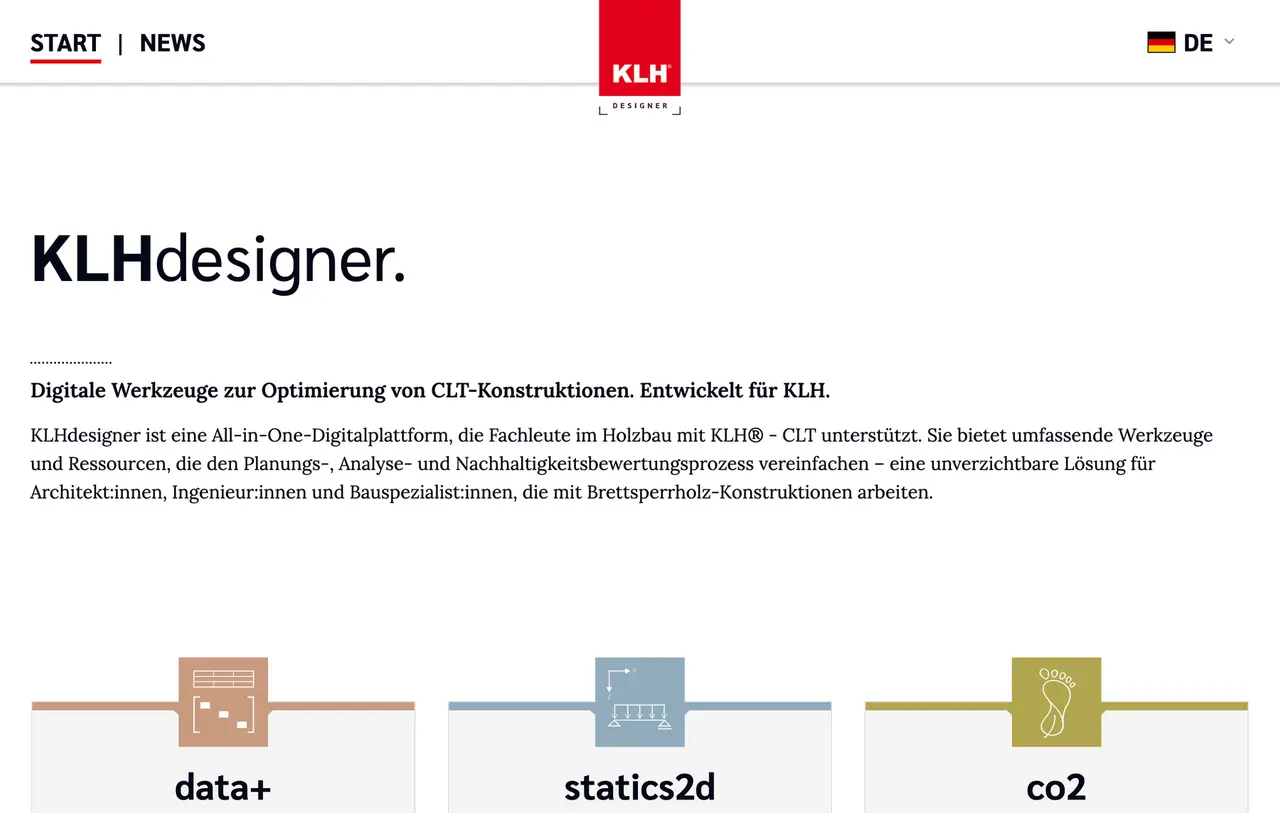
KLHdesigner
Collaboration & roles
KLHdesigner is a long-term project by KLH Massivholz GmbH in collaboration with Omnity e.U.. Acurion is new, but the collaboration behind it is not: Stefan Schintler brings long-standing project experience through Omnity e.U.; Andreas Steinkellner has contributed to the project since 2022 through Solasit e.U. as a development partner. Acurion now bundles this experience in one shared company.
Description
KLHdesigner is not a classic one-off development. Since 2016, a product landscape has been taking shape together with KLH Massivholz GmbH that brings together material data, structural design logic, graphical evaluations, PDF reports and cross-platform usage. The software helps our client and its sales partners worldwide in their day-to-day business — especially when advising customers and with the necessary calculations required before ordering KLH®-CLT components.
See It Yourself
Head over to KLHdesigner. If you are a civil engineer, you should find your way around.
Timeline of the collaboration
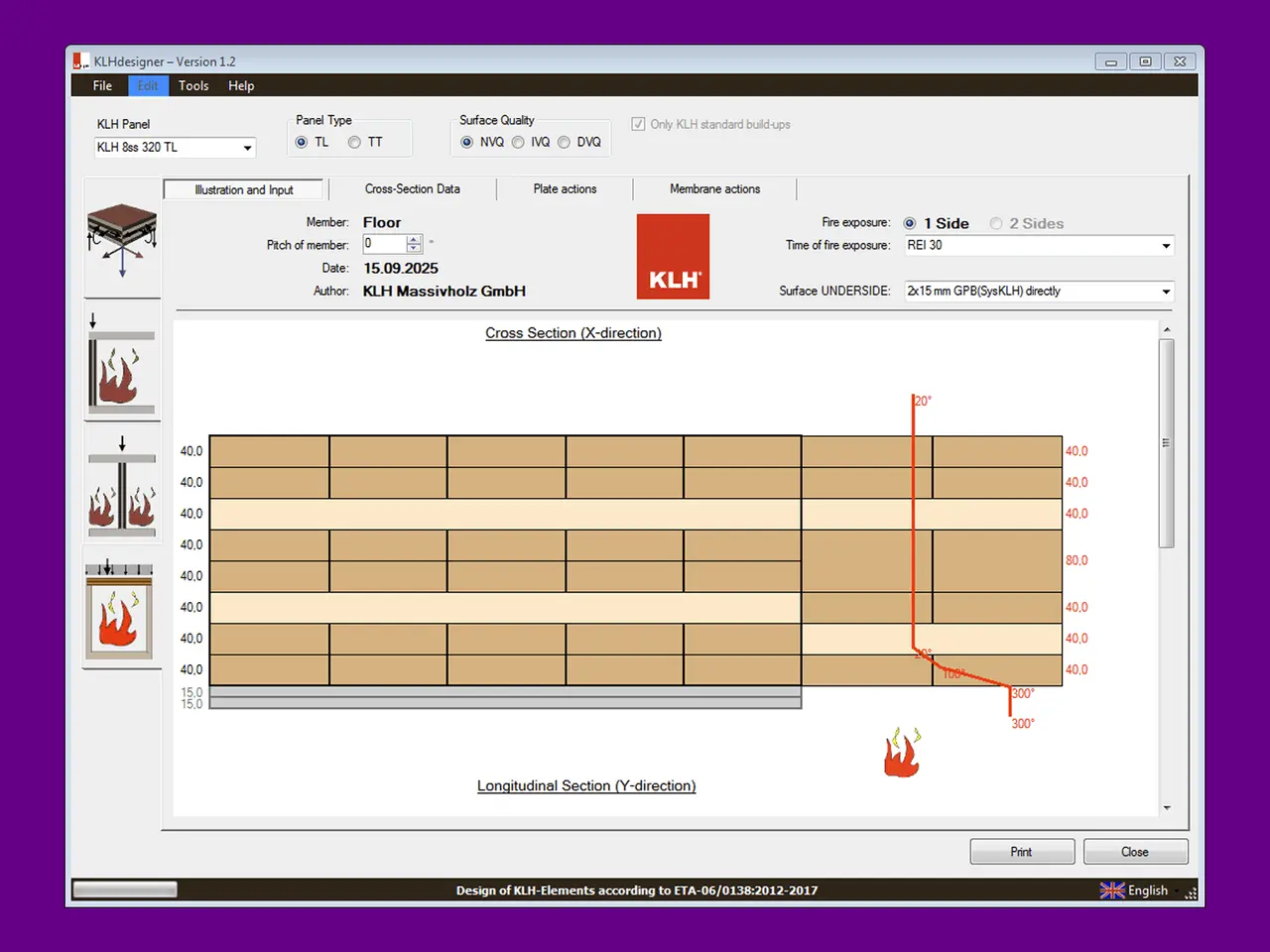
2016: How it started
The starting point was an existing, functional engineering tool for KLH elements. It provided material values and technical information, but as a classic desktop application it was limited in usability, performance, data maintenance and cross-platform availability. The real challenge was to preserve valuable domain knowledge and established workflows while moving them into a modern, maintainable software foundation.
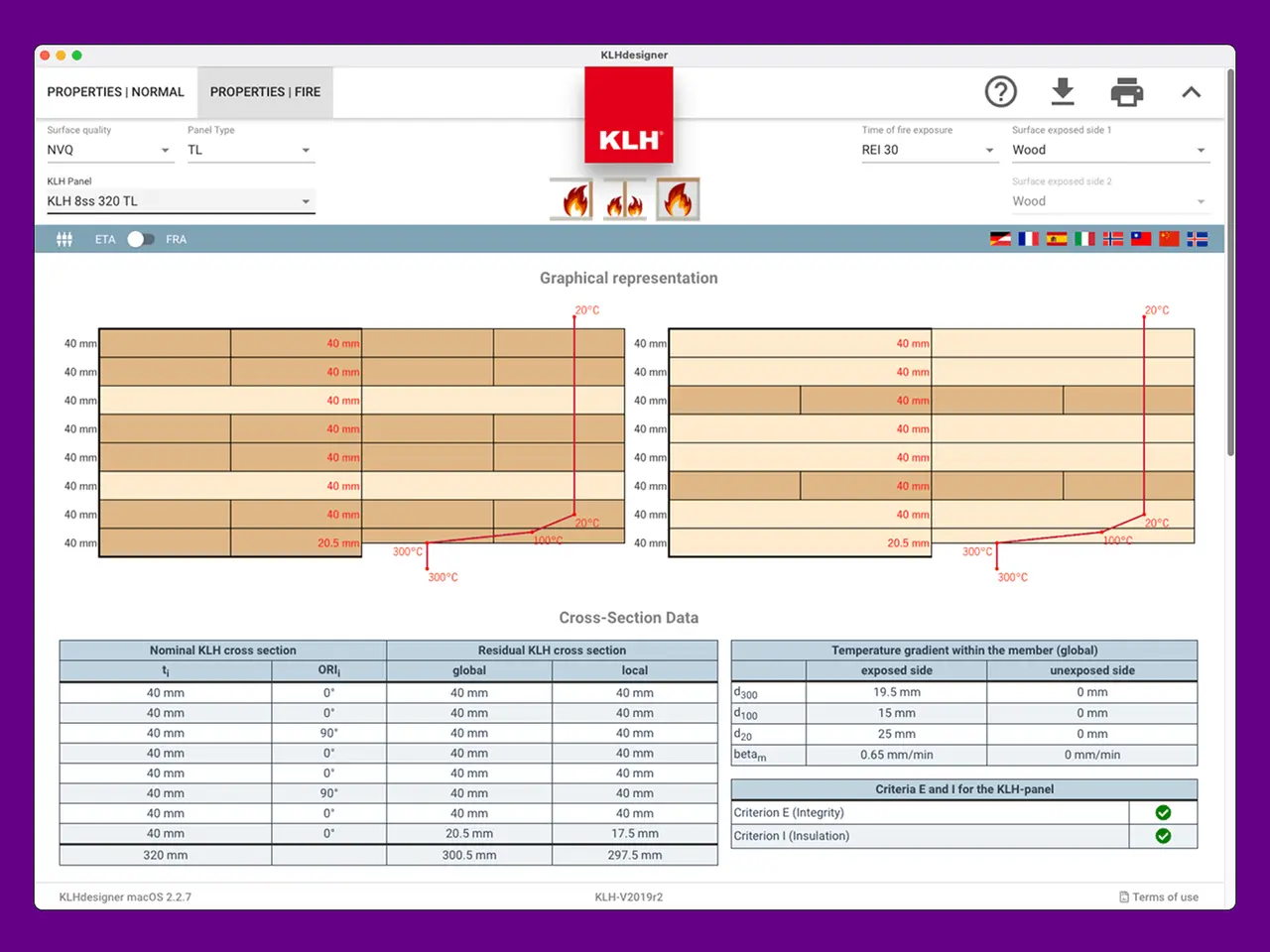
data+ v1: The first modern implementation
data+ v1 became the first new generation of KLHdesigner: a web application with central data management, desktop versions, mobile apps, automatic dataset updates, print/PDF functions and a multilingual interface. A local tool became a distributable product for KLH Massivholz GmbH, sales partners and technical users.
(For privacy reasons, this image has been altered by AI)
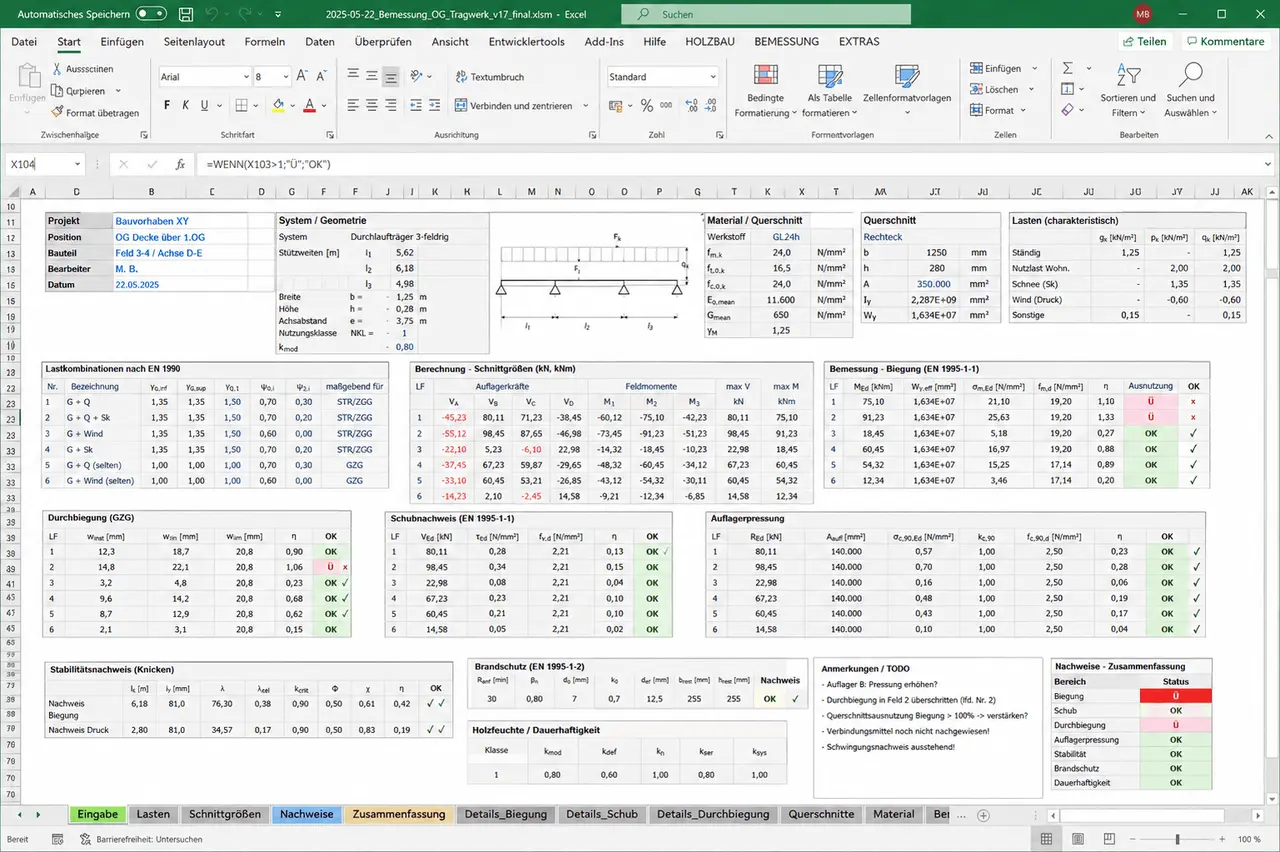
Starting point for statics2d: design in grown Excel workflows
The next major step concerned structural design. Existing Excel-based tools were powerful from an engineering perspective and established in practice, but became difficult to maintain as load cases, variants, and outputs grew. For statics2d, the task was to translate this complexity into a guided application without losing engineering traceability.
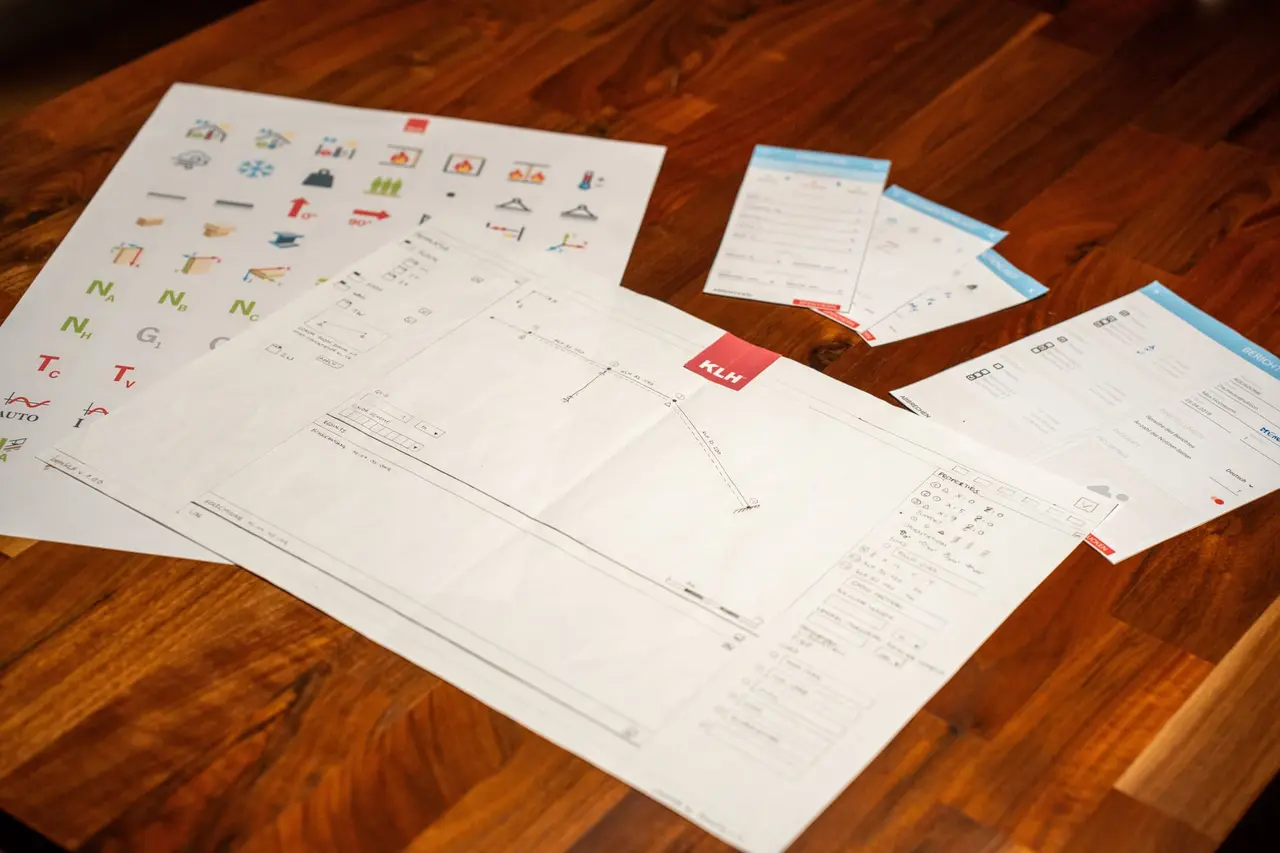
Concept for statics2d: functionality, UI and custom KLH icons
Before implementation started, statics2d was shaped as a detailed draft of both functionality and user interface. On paper, the system model, load cases, calculation steps, result views and report output were brought together into one coherent workflow. Custom commissioned icons created specifically for KLH helped make technical actions and states understandable while keeping the interface aligned with the brand.
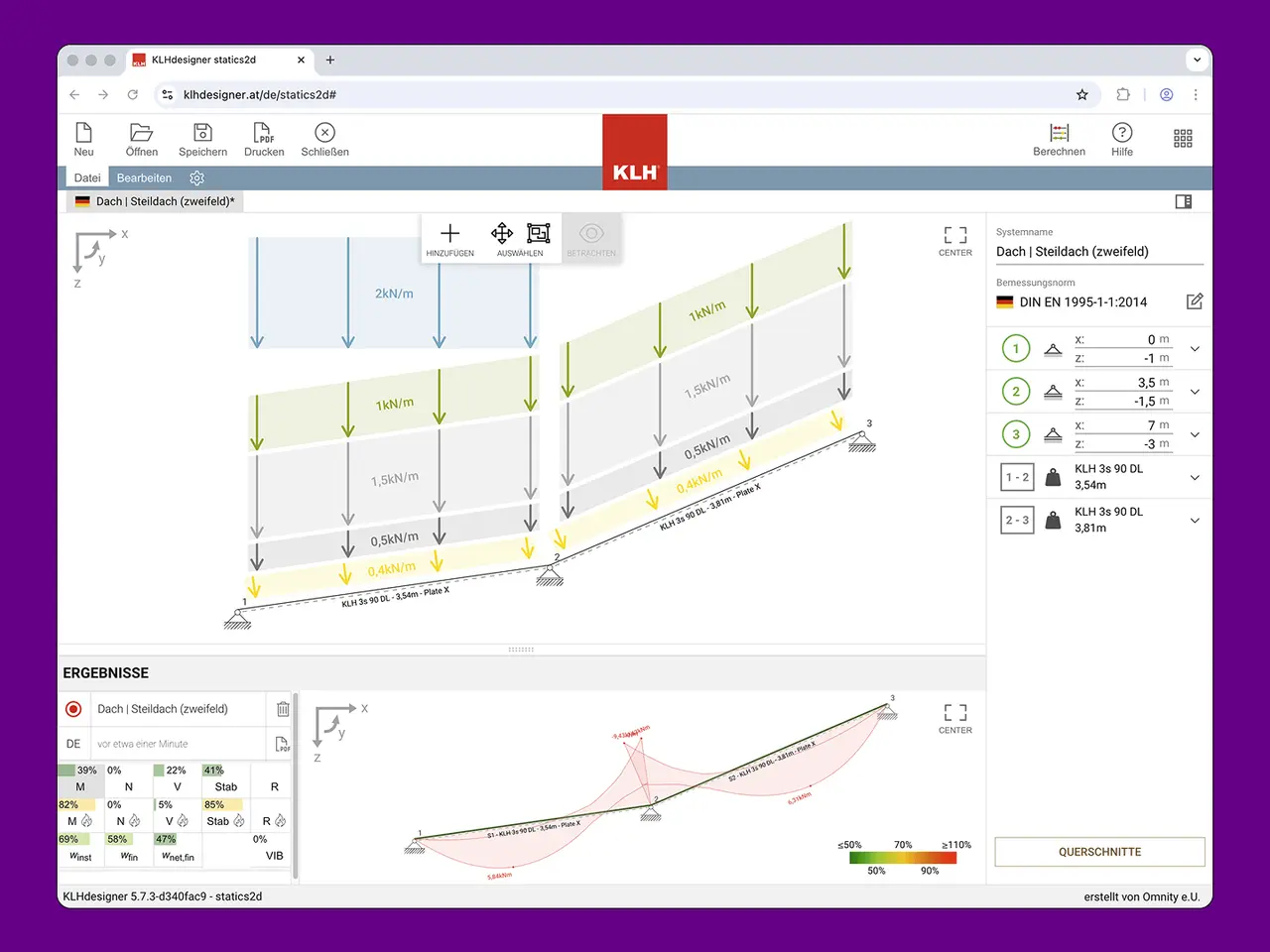
Implementation of statics2d as a web app
The concept became an easily accessible web app: users can model systems of KLH elements, work with templates, define load cases, run calculations, inspect results and generate traceable PDF reports. Web delivery made statics2d available without a traditional installation, while template systems accelerated recurring inputs. For simulation, structural design and calculation logic, we collaborated closely with TailSiT GmbH, whose expertise in civil engineering, computational mechanics, Boundary Element Methods and Finite Element Methods was integrated into the application.
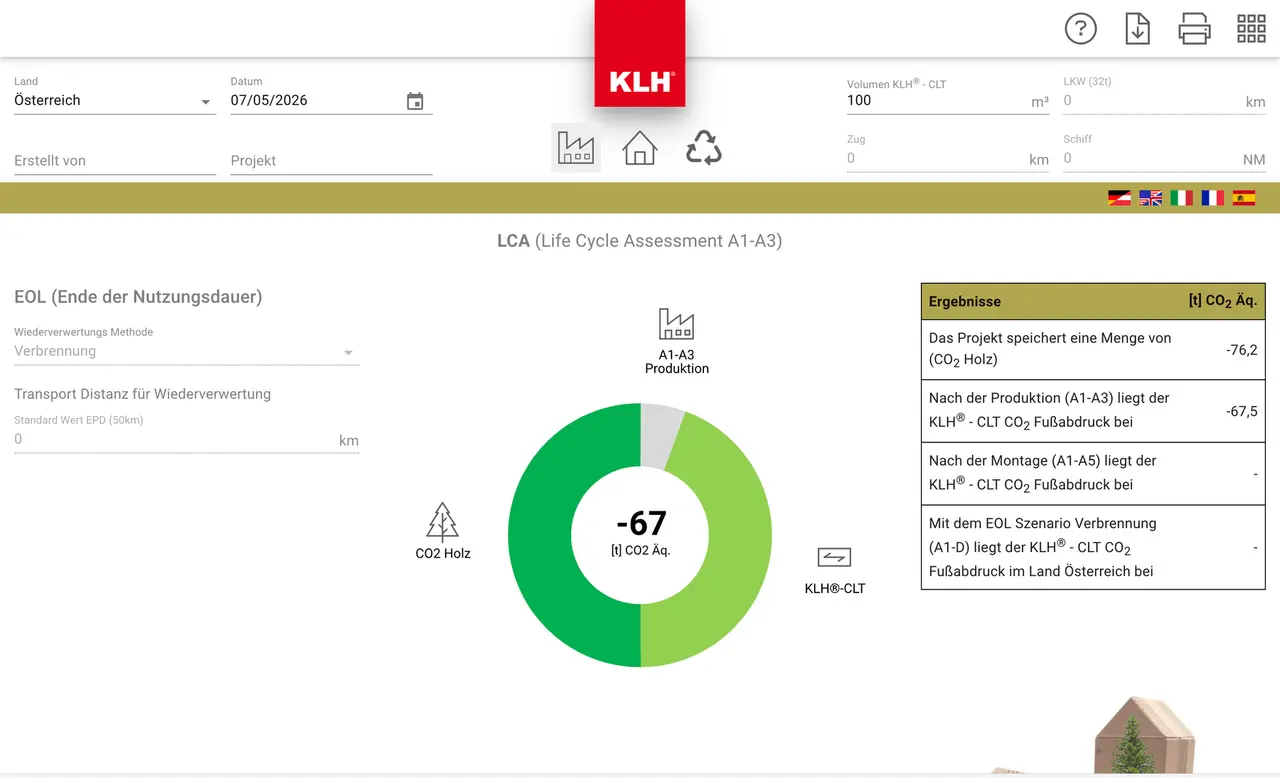
co2: A third app in the KLHdesigner ecosystem
With co2, the package was extended by an application for CO₂ assessment. In addition to material data and structural design, ecological indicators, life-cycle considerations and project-specific inputs became part of the workflow. The platform became broader and closer to the consulting questions that matter before ordering KLH® CLT elements.
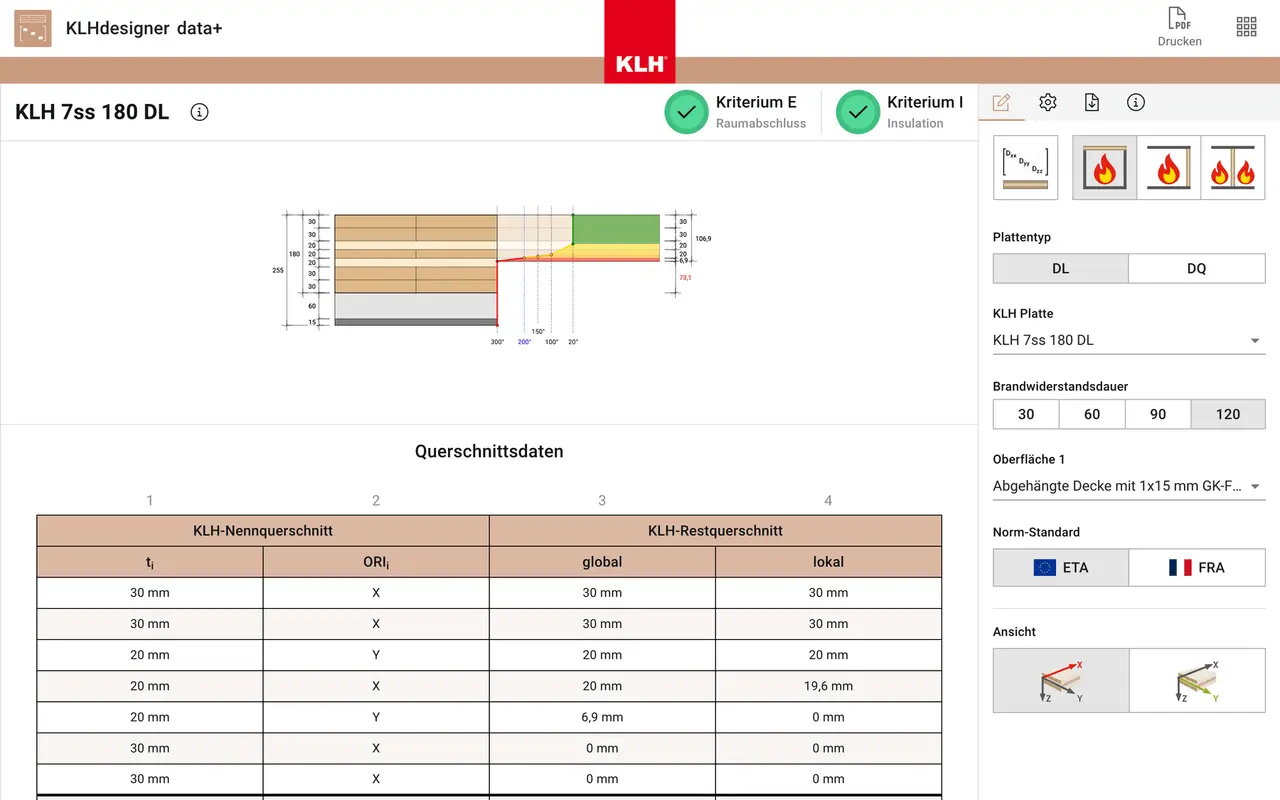
data+ v2: Modernising the interface
With the next generation of data+, the application was modernised further. The interface moved towards current web usage, clearer interaction patterns and technical traceability — including graphical cross-section views, fire exposure, standard selection and detailed tabular values.
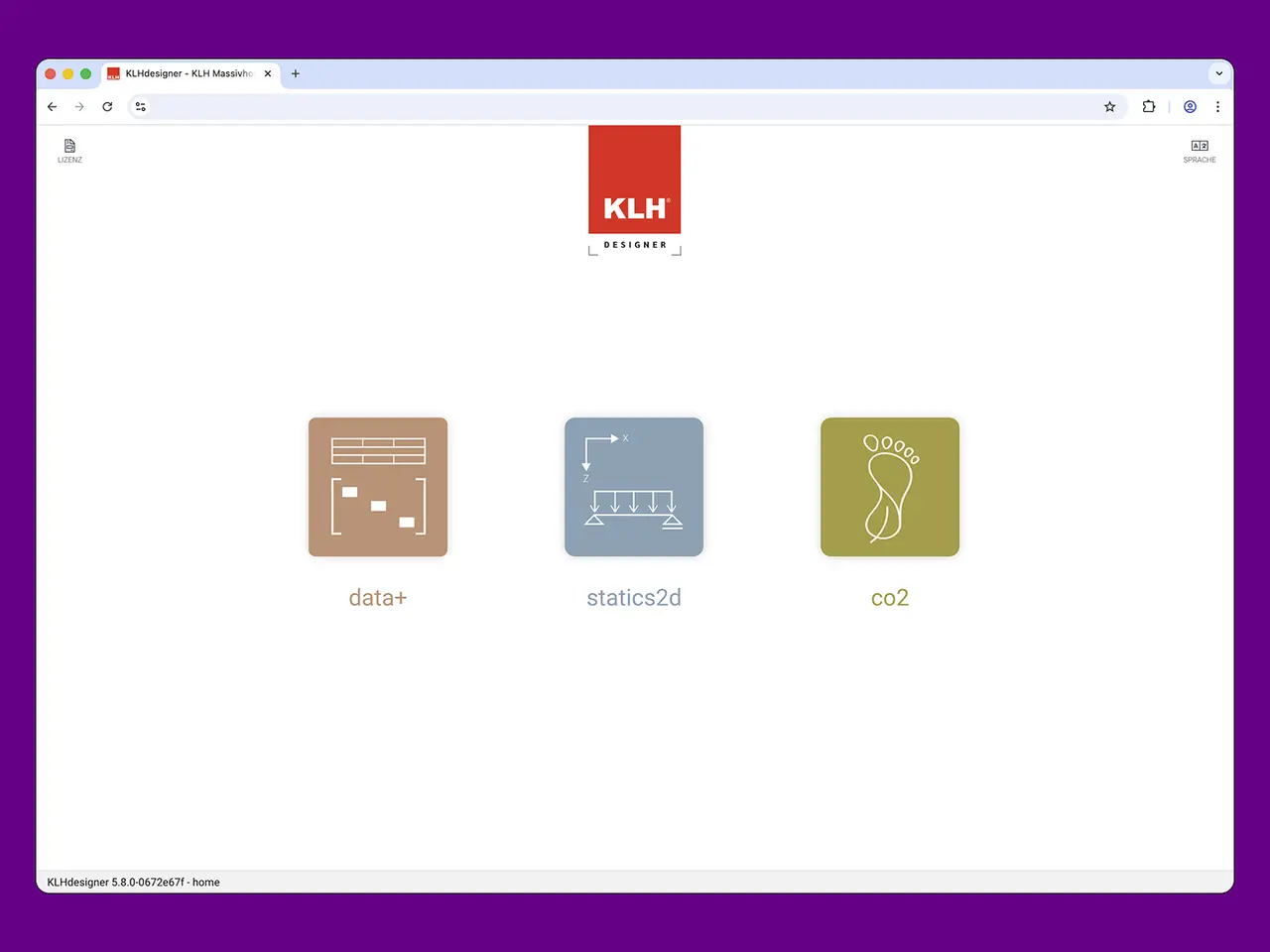
The launcher: individual apps become a platform
With data+, statics2d and co2, KLHdesigner gradually evolved from a single application into a platform approach. The launcher brings these tools together and makes visible what grew over the years: a specialised software ecosystem for consulting, structural design and project preparation around KLH® CLT.
Outlook: Continuous evolution
The platform is not finished. Together with KLH Massivholz GmbH, we are already working on further apps as well as the continuous modernisation and improvement of existing tools — technically, visually and with regard to users’ daily workflows.
Technical focus areas
- Central data management and synchronised product data
- Web interfaces optimised for desktop and mobile use
- Multilingual content and dynamically maintained texts/data
- PDF generation for technical reports, tables and graphics
- Illustration and graph generators for traceable calculation results
- Modular integration of external calculation logic and engineering libraries
Calculation expertise with TailSiT GmbH
For structural design and calculation logic in bemKLH/statics2d v1, we collaborated with TailSiT GmbH. TailSiT GmbH brings deep expertise in civil engineering, computational mechanics, Boundary Element Methods and Finite Element Methods — an important building block for integrating demanding structural calculations into a usable software interface.
TailSiT GmbHResult
This case study shows the kind of software we like to build: durable specialist software that respects existing domain knowledge, reduces technical debt and gradually becomes a productive tool for real workflows.